Your Offer Letter Has 6 Numbers. Only One of Them Is Your Salary
CTC, take-home, HRA, PF, gratuity - decoded plainly so you never get surprised by what lands in your account | TopHire.co
CTC, take-home, HRA, PF, gratuity - decoded plainly so you never get surprised by what lands in your account | TopHire.co
Every week, someone on our team has to explain to a hiring manager why their "competitive" offer just got rejected. 9 times out of 10, it's because they didn't understand how Indian salary structures work. And honestly, a lot of Indian candidates don't fully understand it either. They know their bank credit on the 1st of the month.
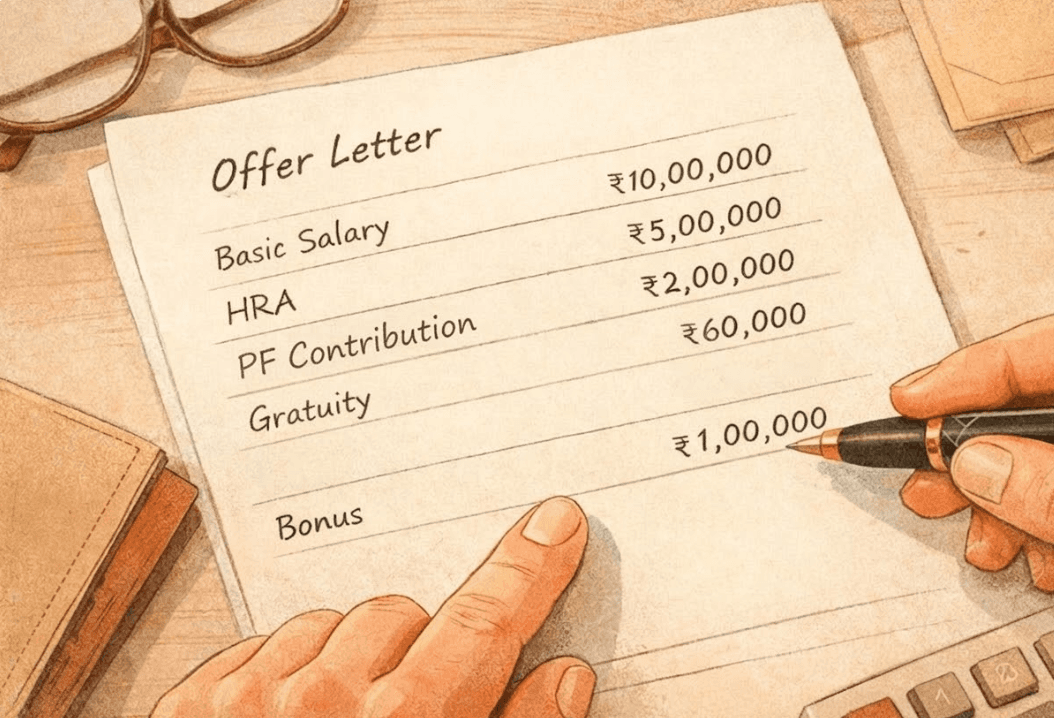
This is the total amount your employer spends on you annually. It includes everything: your salary, employer's PF contribution, gratuity, insurance premiums, meal allowances, and sometimes even the laptop they gave you.
CTC is not your salary. It's the company's expense sheet line item for your employment. Two offers with the same CTC can differ by 3–5 lakh in actual take-home pay.
Your fixed salary is what you receive regardless of performance. It shows up every month. Variable pay depends on conditions — usually a combination of your individual performance rating and company performance.
My advice: treat variable as a bonus if it comes, but negotiate on fixed. A variable is a promise. Fixed is a contract.
This is your total monthly earnings before deductions. It includes basic salary, HRA, special allowance, and any other fixed components. It does not include employer PF or gratuity.
Usually, 40–50% of your gross salary. This is the foundation that several other components are calculated from. A higher basic means higher PF contributions, higher gratuity, and higher HRA. Some companies intentionally keep basic low to reduce their PF liability.
Typically, 40–50% of basic salary. This exists for tax purposes — if you're paying rent, you can claim the HRA exemption and reduce your taxable income. If you own your house or don't pay rent, HRA is fully taxable.
Both you and your employer contribute 12% of your basic salary to PF. The employee contribution is deducted from your salary. The employer contribution is typically shown as part of CTC, but it is not money you see in your bank account monthly.
Some companies cap employer PF at the statutory minimum (1,800/month). Others contribute 12% on the full basic. The difference can be 3–4L per year at senior levels. Always ask.
A lump sum you receive when you leave after completing 5 years of service. Most companies show gratuity as part of CTC, even though you only receive it after 5 years. For someone at a startup who might leave in 2–3 years, this component of CTC is essentially imaginary money.
What actually hits your bank account
Take-home = Gross salary - employee PF - professional tax - income tax (TDS)
Your monthly take-home is usually 60–70% of your monthly gross, depending on your tax bracket and deductions.
When evaluating offers, ask for the full salary breakup — not just CTC, not just "in-hand." The full sheet showing basic, HRA, special allowance, employer PF, gratuity, variable, insurance, and any other components.
And when telling a recruiter your current CTC, be specific about what's fixed and what's variable. It saves everyone time.