The First Round Decision That Quietly Shapes Your Entire Hiring Funnel
Coding test or take-home assignment? The data on drop-off rates, pass rates, and what actually signals real talent | TopHire.co
Coding test or take-home assignment? The data on drop-off rates, pass rates, and what actually signals real talent | TopHire.co
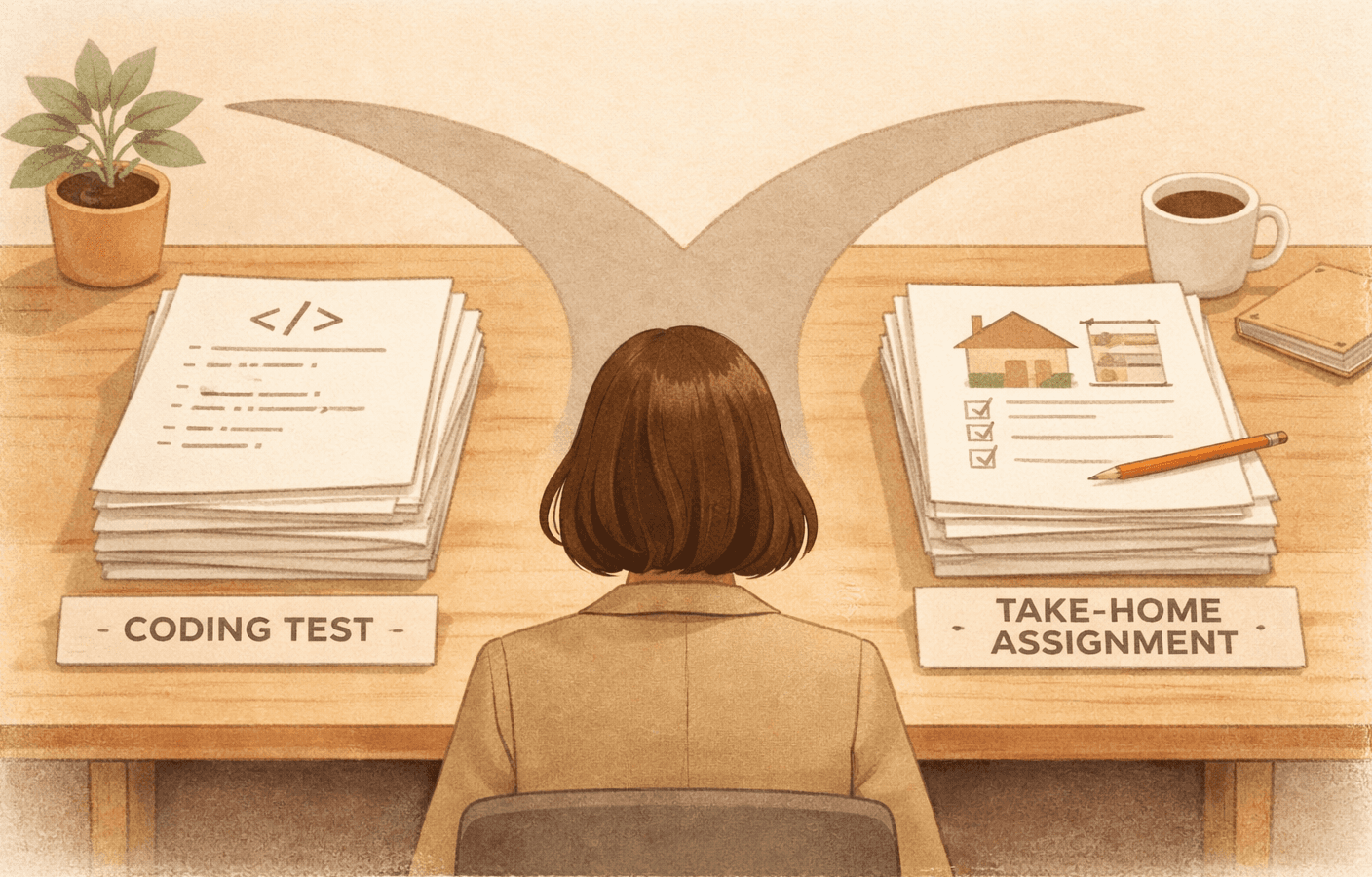
This is one of those decisions that seems small but quietly shapes your entire hiring pipeline. The first round matters more than people think because it's where you lose the most candidates.
Online coding tests (HackerRank, CodeSignal, etc.)
60–70% of candidates who receive the link actually attempt it
Of those who attempt, 40–60% pass the cutoff
Time to complete: 45–90 minutes
30–50% of candidates who receive the assignment submit it
Of those who submit, 60–80% are good enough to move forward
Time to complete: 3–8 hours (what companies say) / 6–15 hours (what candidates actually spend)
The drop-off difference is stark. You lose nearly half your pipeline before you've even evaluated them with a take-home. With a coding test, you lose about a third.
"I'm interviewing at four companies. Three sent me a coding test I can do in an hour. One sent me a take-home that'll take a weekend. Guess which one I'm deprioritising?"
"I spent 8 hours on an assignment. Got rejected with a one-line email. Never again."
The issue isn't effort. It's perceived fairness and ROI. A 60-minute coding test feels proportional to a first round. A weekend project doesn't.
Coding tests are better when: you're hiring at volume (5+ engineers in a quarter), for roles where algorithmic thinking matters, when your brand isn't strong enough to command candidate investment upfront, or when you want to minimise bias.
Take-home assignments are better when: you're hiring for roles where design judgment matters more than speed, you're a well-known brand, you're hiring senior engineers, or you commit to giving detailed feedback on every submission.
For most companies: start with a 60–90 minute online coding test, and keep it practical. Skip the dynamic programming puzzles. Give problems that test what you actually need — parsing API responses, processing event streams, writing SQL queries.
If you're set on a take-home, keep it under 3 hours of real work. Provide a clear rubric. And give feedback when you reject someone.
A short coding test (45 minutes, 2–3 practical problems) as the first filter, followed by a focused 2-hour take-home for the shortlist. The coding test filters out candidates who can't code at the level you need. The take-home lets the remaining candidates show design thinking and code quality.
Whatever you choose, tell candidates upfront what the full process looks like. Candidates don't drop out because the process is long. They drop out because they don't know how long it is.