You're Probably Negotiating on the Wrong Number
What 2,500+ placements reveal about the hike engineers actually get - and why CTC is the wrong thing to compare | TopHire.co
What 2,500+ placements reveal about the hike engineers actually get - and why CTC is the wrong thing to compare | TopHire.co

I've been recruiting tech talent in India for over 7 years now. We've placed 2,500+ candidates across 800+ companies. So when someone asks me "what hike should I expect?" or "what hike should I offer?", I don't have to guess. I have the data.
Here's what I've seen across thousands of offers…
Most engineers switching jobs in India get a 20-40% hike on their fixed salary. The median sits around 30%.
But that number is misleading if you don't break it down further.
30–50% hikes are common. Supply is high, but demand for good junior engineers at product companies is even higher. Companies also know that juniors at service companies are often underpaid relative to their skills, so the correction on switching is steep.
This is the sweet spot. 25–40% is typical. If you're at a service company moving to a product company, expect the higher end. Product-to-product moves tend to sit around 25–30%.
20–30%. At this level, base salaries are already high enough that percentage jumps shrink. A 20% hike on a 40L fixed salary is still 8L more per year. The absolute number matters more than the percentage.
All bets are off. I've seen 15% hikes, and I've seen 80% hikes. At this level, compensation is negotiated on a case-by-case basis. ESOPs, joining bonuses, and retention bonuses muddy the picture completely.
The hike percentage has less to do with your "market value" and more to do with the gap between where you are and where you're going.
An engineer earning 12L fixed at TCS who clears interviews at a Series B startup will routinely get 18–20L. That's a 50–65% jump. Not because they suddenly became 50% better at coding, but because they were underpaid relative to the market for their skill level.
Conversely, an engineer at Flipkart earning 35L fixed who moves to another well-funded startup might get 40–42L. That's a 15–20% bump. Still meaningful, but the gap was smaller to begin with.
Current employer type. Service-to-product switches produce the fattest hikes. Product-to-product is more modest.
How badly the company needs you. If you're one of three candidates and two drop, you have leverage.
Notice period. A candidate who can join in 15 days is worth more than one who needs 90. I've seen companies stretch their budget by 3–5L for someone who can start immediately.
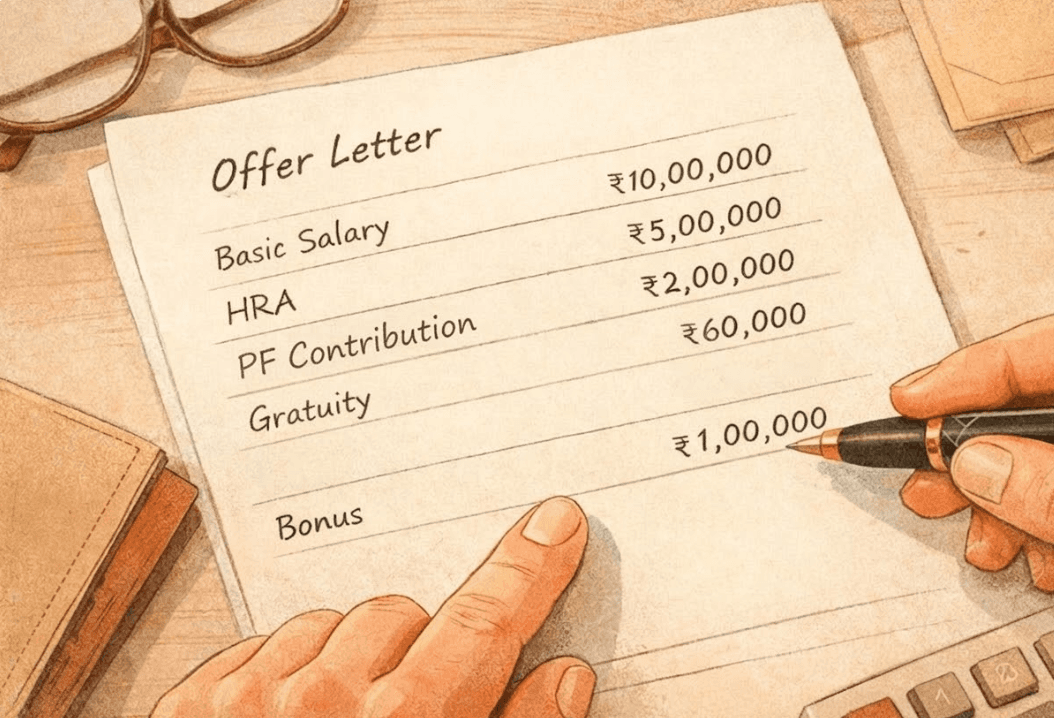
Don't compare CTC to CTC when calculating hikes. CTC in India includes PF employer contribution, gratuity, insurance, and sometimes even meal cards. Two companies offering "25L CTC" can have very different take-home numbers.
Compare fixed-to-fixed and take-home-to-take-home. That's the only real comparison.
If you're getting less than 20% on your fixed salary and you're under 10 years of experience, you're probably leaving money on the table. Push for more or keep looking.
If you're getting 40%+, take it. That's the market telling you that you were underpaid.
And if you're getting 50%+, double-check that the company isn't desperate, burning cash, and likely to do layoffs in 8 months. Overpaying is sometimes a red flag.
Budget for 25–35% hikes when planning headcount costs. The most common mistake is anchoring the offer to the candidate's current salary instead of to the market rate for the role.
Pay for the role, not the person's history.