Too Unhappy to Stay, Too Unprepared to Leave - Here's the 90-Day Way Out
The longer you stay in a job you hate, the harder it becomes to leave - not because the market changed, but because you did | TopHire.co
The longer you stay in a job you hate, the harder it becomes to leave - not because the market changed, but because you did | TopHire.co

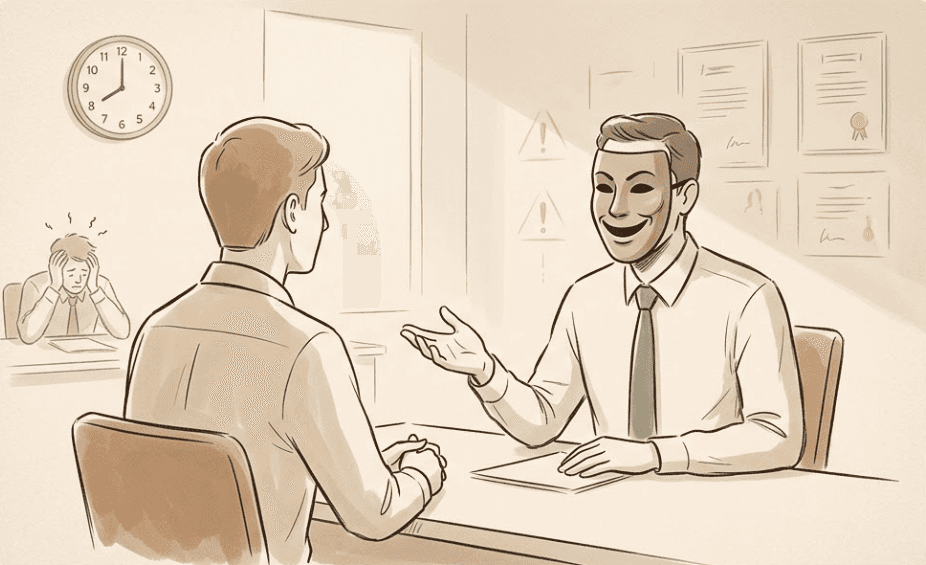
It's 11 PM. You're staring at your laptop. You had a bad day - maybe a bad month. You want to quit, but you know your resume has gaps. Maybe your tech stack is outdated. Maybe your interview skills have atrophied because you haven't interviewed in 3 years. You feel stuck: too unhappy to stay, too unprepared to leave. I talk to candidates in this exact position every week. Here's what I tell them.
Before you do anything about your resume, figure out what's actually making you unhappy. The fix is different depending on the root cause.
Is it the work? You're bored or unchallenged. The most common reason, and most likely to be fixable without leaving.
Is it the people? A bad manager, toxic teammates. Harder to fix internally - managers rarely change.
Is it the money? You know you're underpaid, and it gnaws at you every paycheck.
Is it something outside work? Personal stress or burnout that's making everything feel worse than it objectively is - changing jobs might not help.
Be truthful with yourself. If you can't pinpoint the source, you're not ready to make a change. You're just running from discomfort.
Data structures and algorithms. I know, everyone hates hearing this. But if you haven't practised in 2–3 years, you will fail coding interviews at any company worth joining. You don't need to grind 500 LeetCode problems — you need 50–80 well-chosen ones across the major patterns. Spend 45–60 minutes per day. That's it.
Simultaneously, update your resume. Focus on impact: what did you build, what was the scale, what was the result? "Maintained backend services" becomes "owned the order processing service handling 50K transactions/day, reduced latency by 40% through query optimisation." Same work. Better framing.
If your tech stack is outdated, start a side project using modern tools. You don't need to build the next startup - a small REST API with a React frontend, a data pipeline using current tools, and a CLI tool that solves a real problem. This serves double duty: it's a resume line item and an interview talking point. If you're at a service company wanting to move to a product, this project is the strongest signal you can send.
If you're targeting mid-level or senior roles, system design interviews will make or break you. Read "Designing Data-Intensive Applications" (at least chapters 1-9). Practice designing systems out loud. Design 3-4 systems end-to-end: a URL shortener, a notification system, a chat application, a rate limiter. The skill isn't knowing the answer - it's thinking through trade-offs coherently under time pressure.
By now, you've done practice interviews, identified your weak spots, and addressed them. Schedule interviews at the companies you actually want to join. You should be performing noticeably better than a month ago.
Many engineers suffer silently for months before having a single conversation. "I've been feeling stuck on maintenance work, and I'd like to take on something new. What would need to happen for me to move to a different project?" Some managers will help. Some won't. But you won't know until you ask.
"I'll give this 3 more months. If nothing changes by [date], I will start interviewing." Having a deadline prevents the slow drift into permanent unhappiness. It also gives you a clear signal: if you reach the deadline and nothing has improved, the answer is obvious.
Short stints aren't career killers anymore - one 8-10 month stint is a non-issue; two consecutive short stints raise questions; three is a pattern
You're more marketable than you think - engineers who've been at one company for 3+ years almost always underestimate their market value
Unhappiness compounds - the longer you stay in a job you hate, the more it affects your confidence, skills, and energy; leaving after 2 unhappy years is harder than leaving after 6 unhappy months
If you're reading this at 11 PM, feeling stuck - the feeling is temporary, and the situation is solvable. Start with day one of the plan. Just the first step. Three months from now, you'll wonder why you waited so long.